Technical Challenges and Solutions for Large-Capacity Gantry Band Saws
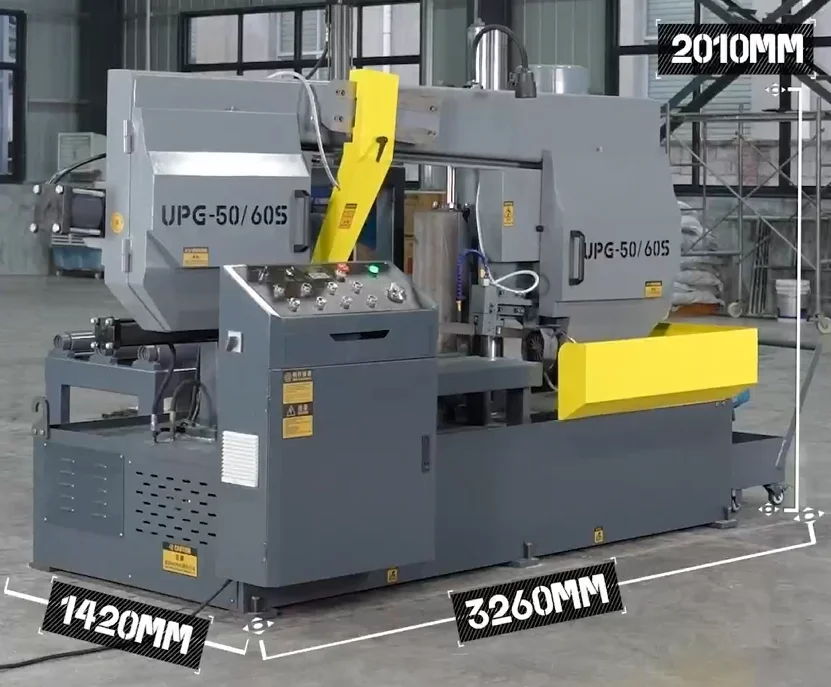
Heavy-duty steel sawing requires massive, highly rigid machines. Learn about the key technical challenges in large-capacity gantry band saws—from vibration damping to active feed rate modulation—and how modern engineering solves them.
In heavy-duty industries like steel mills, forging plants, shipbuilding yards, and large-scale structural steel fabrication, cutting thick solid steel ingots, forge blocks, and massive structural profiles is a daily requirement. These jobs demand large-capacity gantry band saws—machines with cutting capacities starting from 600 mm to over 2,000 mm (24" to 80+").
However, scaling up a band saw machine is not simply a matter of making the frame bigger. As the physical dimensions of the machine increase, engineering teams face significant physics and mechanical challenges. Without sophisticated engineering solutions, issues like frame deflection, blade vibration, heat accumulation, and tool drift will ruin blades and lead to out-of-tolerance cuts.
In this article, we analyze the core technical challenges of large-capacity gantry sawing and the advanced engineering solutions RAXMEKBANDSAW implements to ensure decades of reliable, high-precision cutting.
1. Frame Rigidity & Structural Deflection
The Challenge
When a gantry saw frame spans several meters and carries a heavy saw head assembly, gravity and cutting forces work together to cause structural deflection. When cutting a solid block of steel, the downward force applied by the feed cylinders pushes the blade into the metal. The equal and opposite reaction force pushes back up against the gantry beam. If the frame is not rigid enough, this beam will flex upward. Even a deflection of 0.2 mm can misalign the blade guide arms, twisting the band saw blade and causing it to cut at an angle (leading to crooked cuts or blade runout).
The RAXMEKBANDSAW Solution
- Dual-Column Gantry Structure with Box-Section Design: Instead of single-post or open-c-frame structures, RAXMEKBANDSAW uses a closed, double-column gantry. The columns and the cross-beam are fabricated from heavy-plate, high-tensile structural steel welded into a rigid box-section geometry. This box-section design provides up to 300% higher torsional rigidity compared to standard I-beam structures.
- Stress-Relief Heat Treatment: After welding, the entire gantry structure undergoes a thermal stress-relief process in a specialized furnace. This eliminates internal stresses introduced during welding, preventing the frame from warping or twisting over years of heavy cycling.
- Precision Linear Guide Rails: The saw head rides on ground linear guide rails with recirculating ball bearing blocks, rather than cast-iron sliding ways. This eliminates sliding play, reduces friction, and maintains absolute perpendicularity.
2. Dynamic Blade Vibration & Chatter Damping
The Challenge
A band saw blade is essentially a long steel band under tension. When the teeth strike the workpiece, they create high-frequency impact forces. In large-capacity machines where the unsupported span of the blade between the guide arms can exceed 1,000 mm, the blade is highly susceptible to resonant vibrations (chatter). Blade chatter has two major consequences:
- Micro-Chipping: High-frequency vibration causes the carbide or HSS tooth tips to micro-chip, leading to rapid blade failure.
- Rough Surface Finish: Chatter leaves visible, wavy washboard marks on the cut surface, requiring expensive secondary machining or milling.
The RAXMEKBANDSAW Solution
- Hydraulically Clamped Carbide Guide Pads: RAXMEKBANDSAW machines employ dual guide arms equipped with precision-ground carbide guide pads. These pads are clamped against the sides of the blade using adjustable hydraulic cylinders. The hydraulic clamping acts as a dynamic damper, absorbing lateral vibration and keeping the blade running in a perfectly straight plane.
- Optimal Variable Tooth Pitch Selection: By using blades with variable tooth pitches (e.g., 1.4/2.0 TPI or 0.75/1.25 TPI), the frequency of tooth impacts is randomized. This prevents the blade from reaching its natural resonant frequency, effectively eliminating chatter.
- Heavy Cast-Iron Blade Wheels: The driving and driven blade wheels are cast from high-grade nodular iron and precision-balanced. The high rotational inertia of these heavy wheels acts as a flywheel, smoothing out speed fluctuations when teeth enter and exit the cut.
3. Intelligent Feeding Controls & Variable Section Compensation
The Challenge
When cutting round bars, structural tubing, or H-beams, the contact length between the blade teeth and the metal changes continuously throughout the cut. For instance, when cutting a Ø 800 mm solid round billet:
- At the start of the cut, the contact length is very short (just a few millimeters at the top curve).
- In the middle of the cut, the contact length reaches its maximum (800 mm).
- At the bottom, it shrinks back down.
If the machine applies a constant downward speed, the blade teeth in the middle will become overloaded because they must clear a massive volume of chips over a long contact length. Conversely, at the top and bottom, the machine will cut far too slowly, wasting valuable cycle time.
The RAXMEKBANDSAW Solution
- Closed-Loop PID Servo-Hydraulic Feed: RAXMEKBANDSAW’s CNC controller features an intelligent feeding system that monitors cutting resistance in real-time. By reading the motor current (torque load) and the hydraulic cylinder pressure, the PLC calculates the instant contact area.
- Feed Rate Auto-Regulation: The system automatically reduces the downward feed rate (mm/min) as the blade enters the widest section of the cut, ensuring the tooth gullets do not overflow with chips. As the contact area decreases, it automatically speeds up the downfeed, reducing the overall cycle time by up to 40% while protecting the blade from stripping.
4. Automatic Blade Tensioning & Thermal Expansion Compensation
The Challenge
To cut straight, a large-capacity bandsaw blade must be held under immense tension (typically 35,000 to 40,000 PSI). During a long cut, the friction between the blade and the metal generates extreme heat, causing the blade to expand. As the steel band heats up, it stretches. On manual or mechanical tensioning systems, this expansion causes the blade to lose tension and sag, leading to crooked cuts, blade slippage on the drive wheels, or catastrophic blade breakage.
The RAXMEKBANDSAW Solution
- Active Hydraulic Tensioning System: RAXMEKBANDSAW equips its large-capacity gantry saws with an automatic, sensor-monitored hydraulic tensioning system. A dedicated hydraulic cylinder continuously applies force to the driven wheel slide block.
- Real-Time Thermal Compensation: A pressure sensor monitors the tension force. If the blade expands due to heat, the hydraulic system instantly retracts the wheel slightly to maintain the target tension with single-digit PSI accuracy. When the machine is idle, the system automatically relaxes the tension to prevent structural fatigue on the backing band and the wheel bearings.
Technical Summary of RAXMEKBANDSAW Gantry Solutions
| Engineering Challenge | Legacy Gantry Saw Systems | RAXMEKBANDSAW Heavy-Duty CNC Gantry Saws |
|---|---|---|
| Frame Flexing | Fabricated structural I-beams; prone to twisting | Thermal-stress-relieved box-section gantry |
| Vibration Control | Spring-loaded guide rollers; high chatter | Hydraulic carbide guide pads with balanced iron wheels |
| Varying Cross-Sections | Manual feed valve; operator guesses speed | Active PID closed-loop torque & force compensation |
| Thermal Expansion | Manual screw tensioner; loses tension as it heats | Active hydraulic tensioning with automatic temperature compensation |
Upgrade Your Large-Scale Metal Sawing with RAXMEKBANDSAW
Choosing a large-capacity gantry bandsaw is a long-term capital investment. At RAXMEKBANDSAW, we build machines that deliver high productivity, lower consumable costs, and absolute cutting accuracy for decades. Our engineering team is ready to design custom material-handling systems, roller tables, and bundle clamping setups to integrate seamlessly into your heavy-duty production environment.
Contact a RAXMEKBANDSAW technical sales representative today to schedule a detailed engineering consultation or request a custom quote.
Risorse Correlate
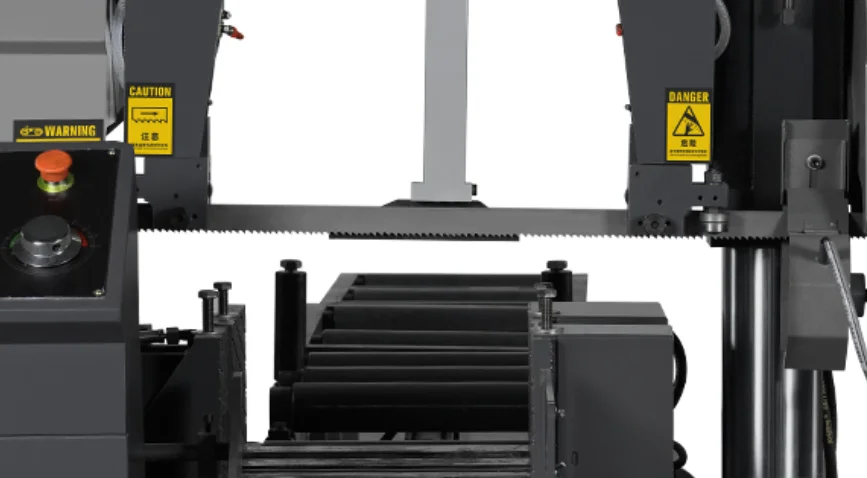
Carbide vs. Bimetal Band Saw Blades — Maximize Your Cutting Strategy
Choosing between bimetal and carbide-tipped band saw blades is a critical decision for metal fabrication shops. Learn how to select the right blade, minimize cost-per-cut, and increase productivity by 300% when cutting alloy steels.
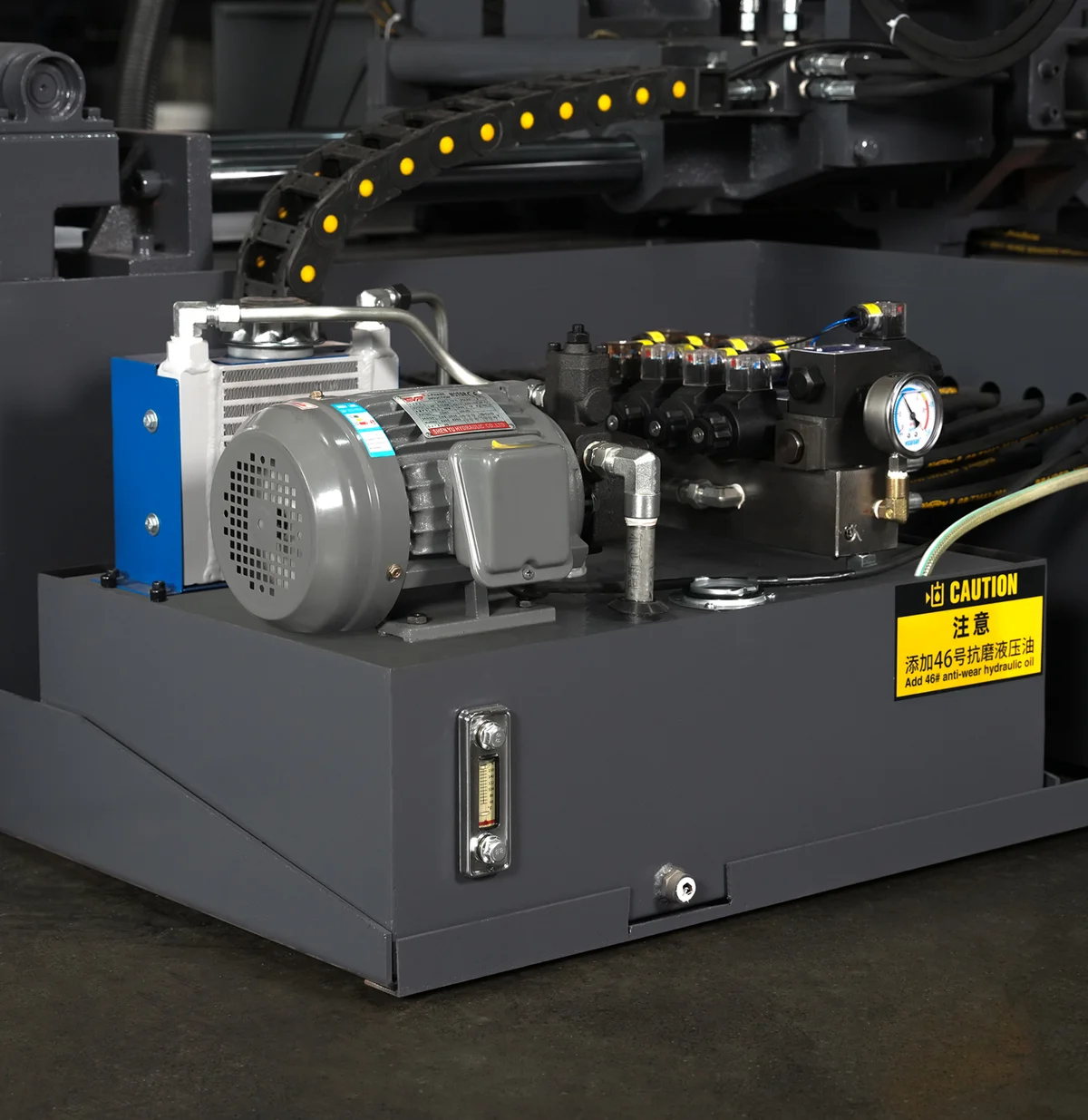
CNC Band Saw Machine – Enhance Your Cutting Performance with VFD Gearmotor Drives or Hydraulic Servo Feed Systems
A CNC band saw machine is one of the most advanced and efficient technologies used in modern metal fabrication. In simple terms, it utilizes computerized control for automatic, high-precision sawing of heavy metals, profiles, and structural sections.
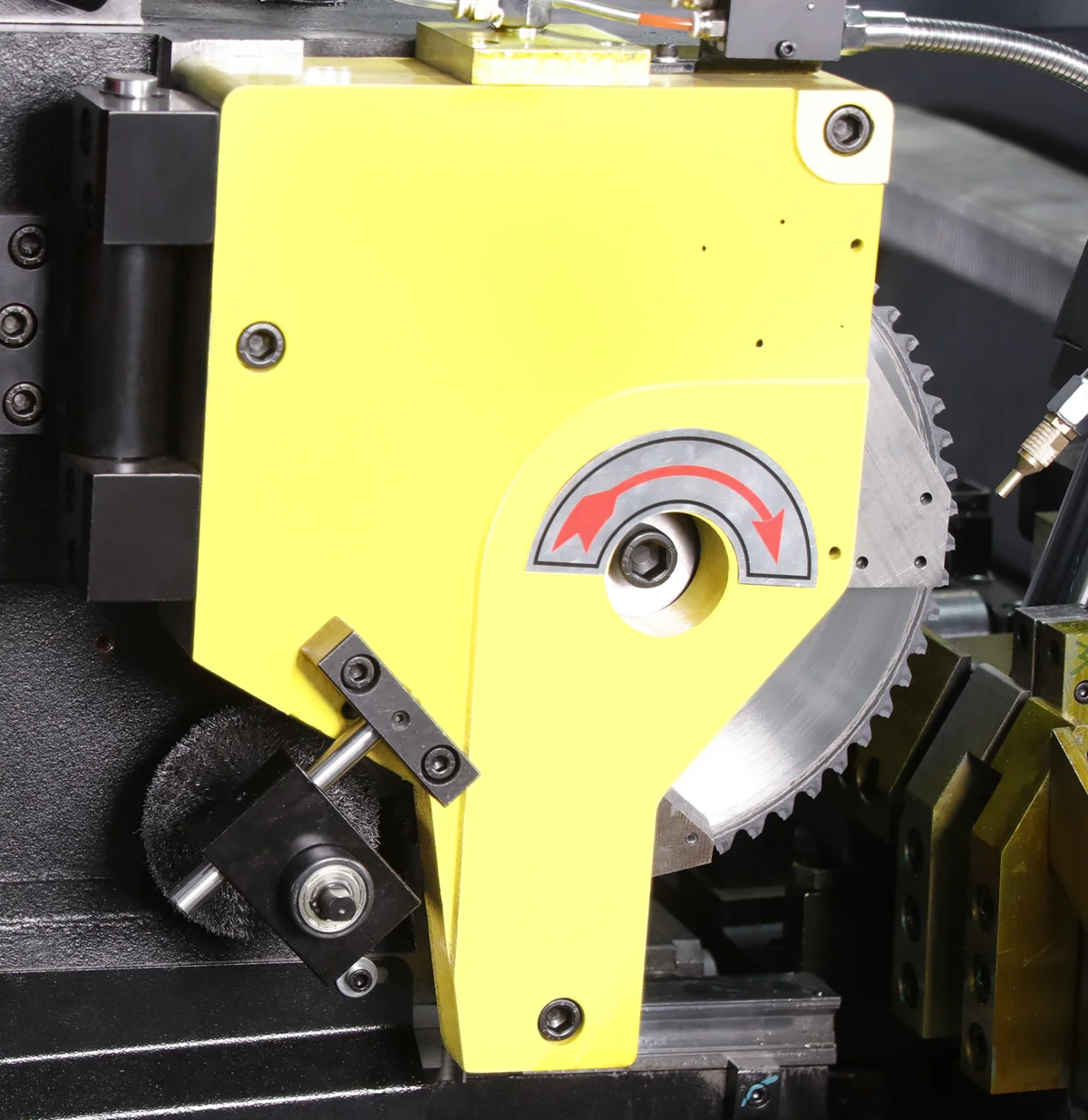
Evolution of Core Equipment and Technologies for Circular Metal Saws
Explore the technological shift from legacy manual saws to advanced high-speed automatic carbide circular sawing cells. Understand the design principles and ROI of the RAXMEKBANDSAW C-75 circular metal saw.