How to Optimize Cutting Parameters for Bending-Resistant Structural Steel
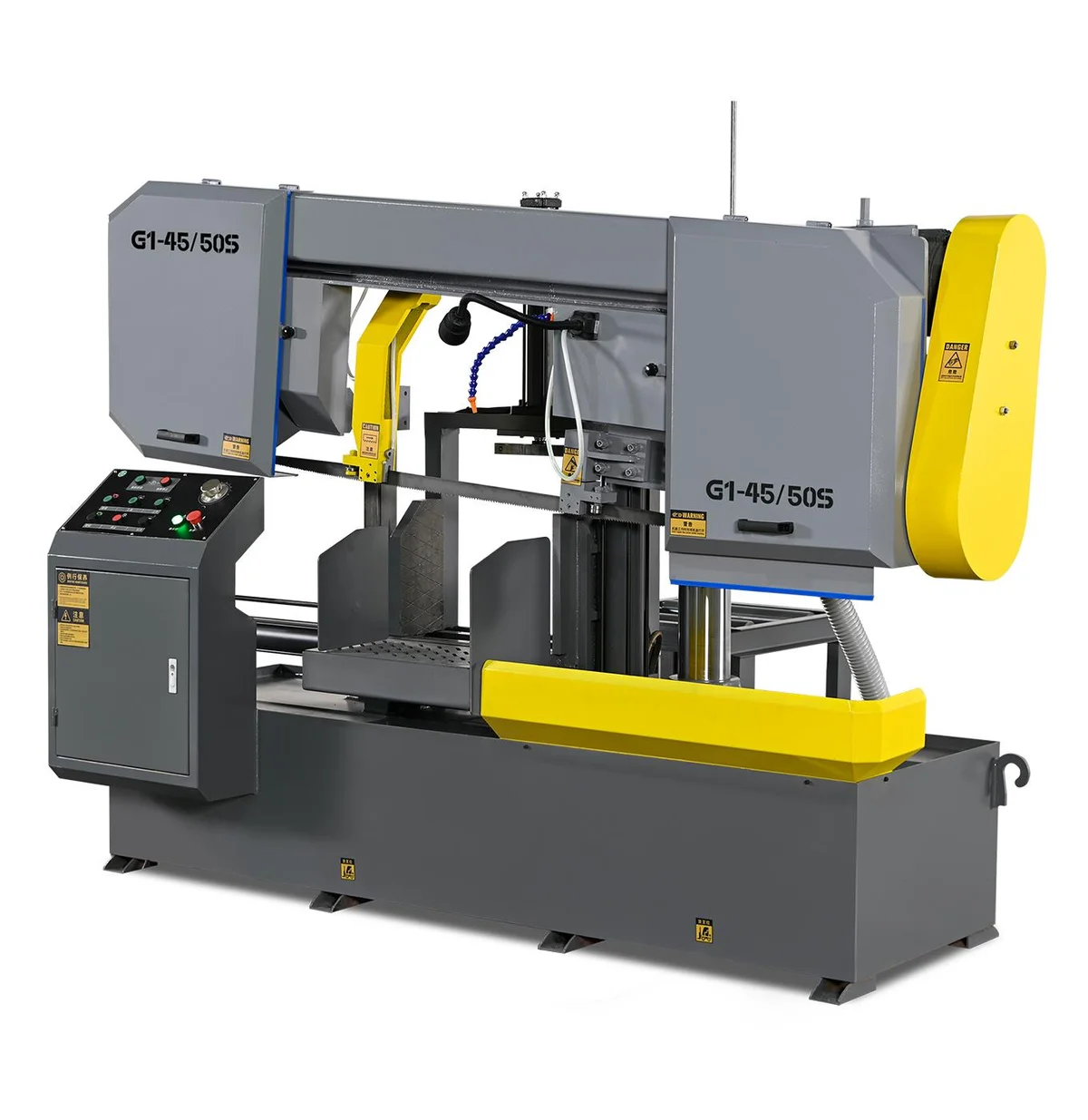
Optimizing cutting parameters for structural steel is essential to ensure cutting accuracy, extend blade life, and maximize productivity. Learn how to calibrate feed rates, blade speeds, and coolant flow for H-beams and channels.
In the structural steel fabrication industry, cutting efficiency directly impacts the bottom line of projects like bridge building, high-rise construction, and industrial warehouses. Processing heavy structural profiles—such as H-beams (universal beams), I-beams, channel steel, and hollow structural sections (HSS)—presents unique challenges for band saw operators.
Unlike solid round bar stock, structural steels have varying cross-sections. When sawing an H-beam, the blade must transition between cutting wide, flat flanges and thin, vertical webs. If the cutting parameters (blade speed, feed rate, and tooth pitch) are not properly calibrated, operators will experience premature blade wear, tooth stripping, out-of-square cuts, and costly downtime.
In this technical guide, we outline how to optimize cutting parameters for structural steel to maximize both throughput and blade longevity.
1. Selecting the Correct Tooth Pitch (TPI)
Selecting the right tooth pitch (Teeth Per Inch, or TPI) is the single most important factor in preventing tooth stripping.
- The Golden Rule: You must always have at least 3 teeth in contact with the workpiece cross-section at all times. Having fewer than 3 teeth will cause the teeth to straddle the metal wall, leading to heavy impact shocks that will strip teeth off the blade.
- Maximum Teeth Limit: Avoid having more than 24 teeth in contact with the cut area, as the small gullets of fine-tooth blades will quickly fill with chips, causing the blade to wander or bind.
For structural profiles, always use a variable tooth pitch (e.g., 3/4 TPI or 4/6 TPI). Variable TPI features alternating tooth sizes and gullet depths, which dampens vibration and prevents resonance.
Recommended TPI for Structural Steel Walls
| Material Wall Thickness | Recommended Variable Tooth Pitch (TPI) |
|---|---|
| Under 4 mm (0.15") | 8/12 TPI or 10/14 TPI |
| 4 - 8 mm (0.15" - 0.3") | 5/8 TPI or 6/10 TPI |
| 8 - 15 mm (0.3" - 0.6") | 4/6 TPI or 5/8 TPI |
| 15 - 30 mm (0.6" - 1.2") | 3/4 TPI or 4/6 TPI |
| Over 30 mm (1.2") | 2/3 TPI or 1.4/2.0 TPI |
2. Optimizing Blade Speed (Vc)
Blade speed, measured in meters per minute (m/min) or surface feet per minute (SFPM), controls the speed at which the blade teeth shear the metal.
Structural steel (typically grade A36, S235JR, or S355JR) is relatively soft but abrasive. If the blade speed is too high, friction will heat the tooth tips to over 650°C, causing them to lose hardness and dull rapidly. If the speed is too low, the feed pressure will force the teeth to rub rather than cut, causing work-hardening and tooth wear.
Target Blade Speeds for Mild Structural Steels
- Standard Bi-Metal (M42) Blades: Run at 65 - 85 m/min.
- Premium Carbide-Tipped Blades: Can run at 90 - 130 m/min on high-rigidity machines.
Tip: If the structural steel is galvanised or has heavy rust/scale on the surface, reduce the blade speed by 10-15% for the initial cut to prevent abrasive scale from dulling the sharp tips.
3. Calibrating the Feed Force and Feed Rate (Vf)
Feed force controls the depth of the cut (how deeply each tooth penetrates the steel), while feed rate controls the downward velocity of the saw head.
The Challenge of Changing Cross-Sections
When cutting an H-beam horizontally:
- Top Flange: The blade cuts a wide horizontal section. Resistance is high. (Requires low feed speed, high downward pressure).
- Web: The blade cuts through two thin vertical walls. Resistance drops dramatically. (Requires high feed speed, low downward pressure to prevent the blade from hovering or rubbing).
- Bottom Flange: The blade hits the wide bottom section again. (Requires low feed speed, high downward pressure).
The Solution: Active Feed Compensation
Using manual flow valves, the operator must set a single, conservative feed speed based on the flanges, making the web cut extremely slow.
Modern RAXMEKBANDSAW CNC band saws solve this with a closed-loop servo-hydraulic feed system. The system monitors the hydraulic cylinder pressure and blade motor torque. When it enters the thin web, it automatically increases the downfeed speed, and then throttles back when entering the bottom flange. This intelligent compensation reduces overall cycle times by up to 45%.
Cutting Feed Profiles by Structural Shape
| Structural Profile Shape | Cutting Phase | Material Contact Width | Dynamic Feed Strategy (Servo-Hydraulic Control) |
|---|---|---|---|
| H-Beam / I-Beam | 1. Top Flange | Wide / Solid | Low feed speed ($v_f$), high downward force |
| 2. Vertical Web | Thin / Interrupted | High feed speed ($v_f$), low downward force | |
| 3. Bottom Flange | Wide / Solid | Low feed speed ($v_f$), high downward force | |
| Hollow Structural Sections (HSS) | 1. Top Wall | Wide / Solid | Medium-low feed speed ($v_f$), high force |
| 2. Side Walls | Two Thin Sections | High feed speed ($v_f$), low force | |
| 3. Bottom Wall | Wide / Solid | Medium-low feed speed ($v_f$), high force | |
| U-Channel | 1. Side Flanges | Two Solid Rectangles | Medium feed speed ($v_f$), medium force |
| 2. Connecting Web | Wide / Flat | Low feed speed ($v_f$), high force |
4. Coolant and Lubrication Strategy
In structural steel cutting, coolant serves two main purposes: cooling the tooth tips to prevent thermal softening, and flushing chips out of the cut channel. If chips are not flushed, the blade will re-cut them, leading to tooth damage.
- Flood Coolant: For bundle cutting and heavy profiles, flood coolant is highly recommended. Ensure a rich mixture (8 - 10% concentration of water-soluble oil) to provide both cooling and lubricity. Position the coolant nozzles to spray directly into the guide arms so the fluid enters the cut channel along with the blade.
- MQL (Minimum Quantity Lubrication) / Oil Mist: If you are cutting dry hollow sections (pipes/tubes) and want to avoid wet clean-up on the shop floor, use an MQL system. MQL sprays a fine mist of pure vegetable oil directly onto the blade gullets, lubricating the cut with zero fluid waste.
5. Parameter Diagnostics: Analyzing the Chips
One of the easiest ways to verify if your cutting parameters are optimized is to inspect the steel chips produced during sawing.
- Thin, Powdery Chips: The feed rate is too low. The teeth are rubbing the metal instead of shearing it. Solution: Increase feed rate or reduce blade speed.
- Thick, Dark Blue/Burned Chips: The blade is generating excessive heat. The feed rate or blade speed is too high. Solution: Reduce blade speed, check coolant flow, or adjust feed rate.
- Tightly Curled, Silvery/Bright Chips: The parameters are perfectly optimized. The teeth are cleanly shearing the steel with minimal friction.
Achieve Peak Structural Sawing Efficiency with RAXMEKBANDSAW
Optimizing structural steel sawing requires a combination of rigid machinery, high-quality blades, and intelligent controls. RAXMEKBANDSAW’s CNC double-column band saws are designed specifically for heavy-duty profile processing, featuring advanced servo downfeed controls and dynamic blade damping to ensure straight cuts and long blade life.
Contact the RAXMEKBANDSAW engineering team today to discuss your structural steel cutting challenges, schedule test cuts, or receive a technical quotation for a high-efficiency sawing system.
Recursos Relacionados
Technical Challenges and Solutions for Large-Capacity Gantry Band Saws
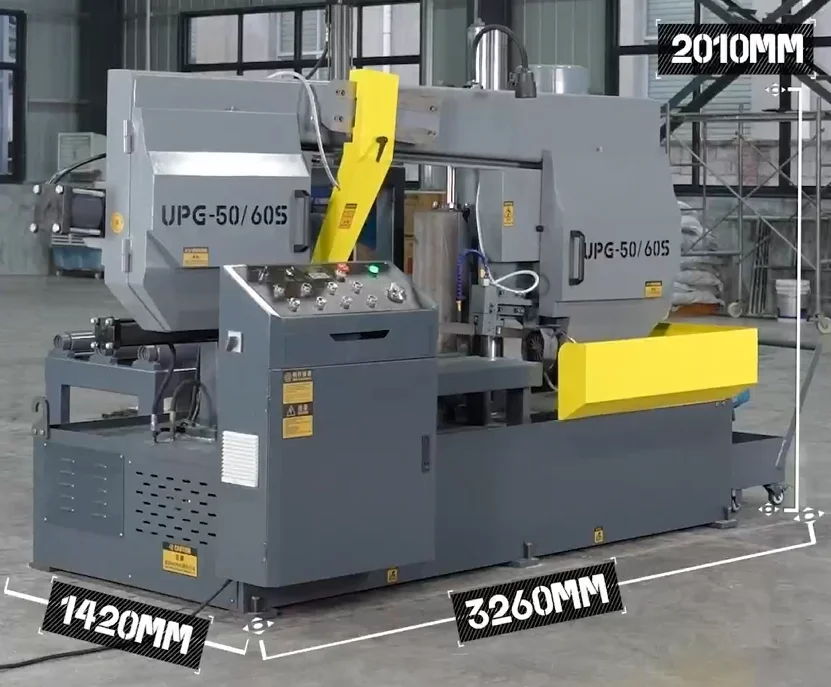
Heavy-duty steel sawing requires massive, highly rigid machines. Learn about the key technical challenges in large-capacity gantry band saws—from vibration damping to active feed rate modulation—and how modern engineering solves them.
Carbide vs. Bimetal Band Saw Blades — Maximize Your Cutting Strategy
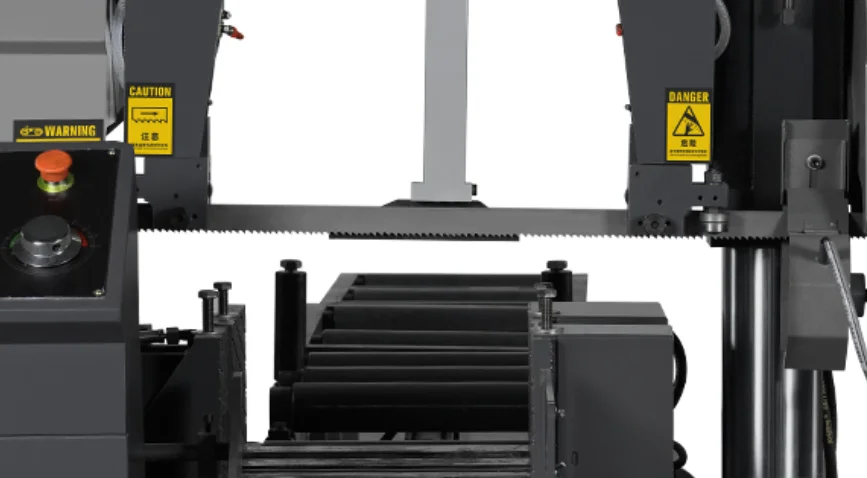
Choosing between bimetal and carbide-tipped band saw blades is a critical decision for metal fabrication shops. Learn how to select the right blade, minimize cost-per-cut, and increase productivity by 300% when cutting alloy steels.
CNC Band Saw Machine – Enhance Your Cutting Performance with VFD Gearmotor Drives or Hydraulic Servo Feed Systems
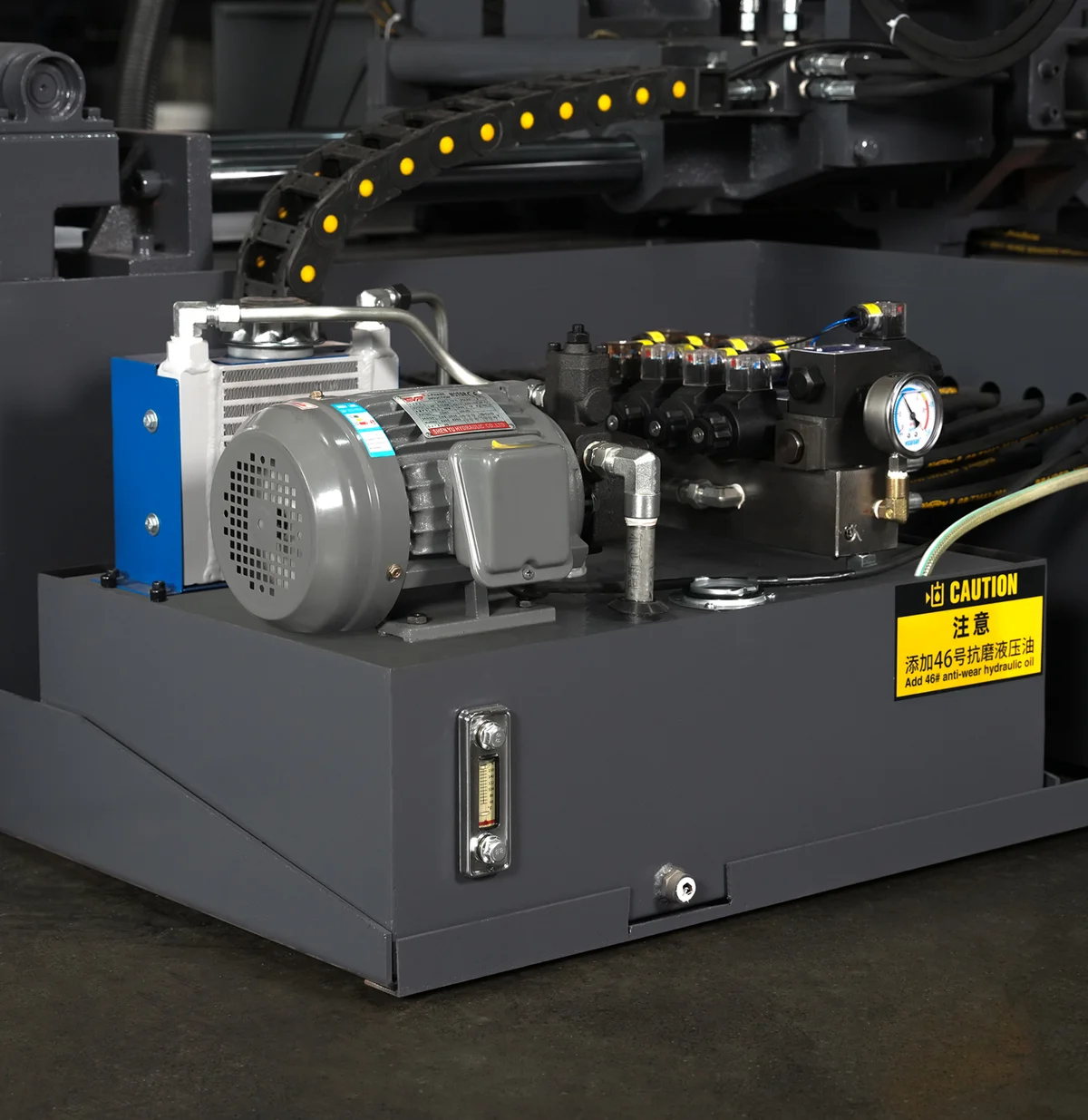
A CNC band saw machine is one of the most advanced and efficient technologies used in modern metal fabrication. In simple terms, it utilizes computerized control for automatic, high-precision sawing of heavy metals, profiles, and structural sections.