What Are the Main Parts of a Gantry Band Saw and Their Functions?
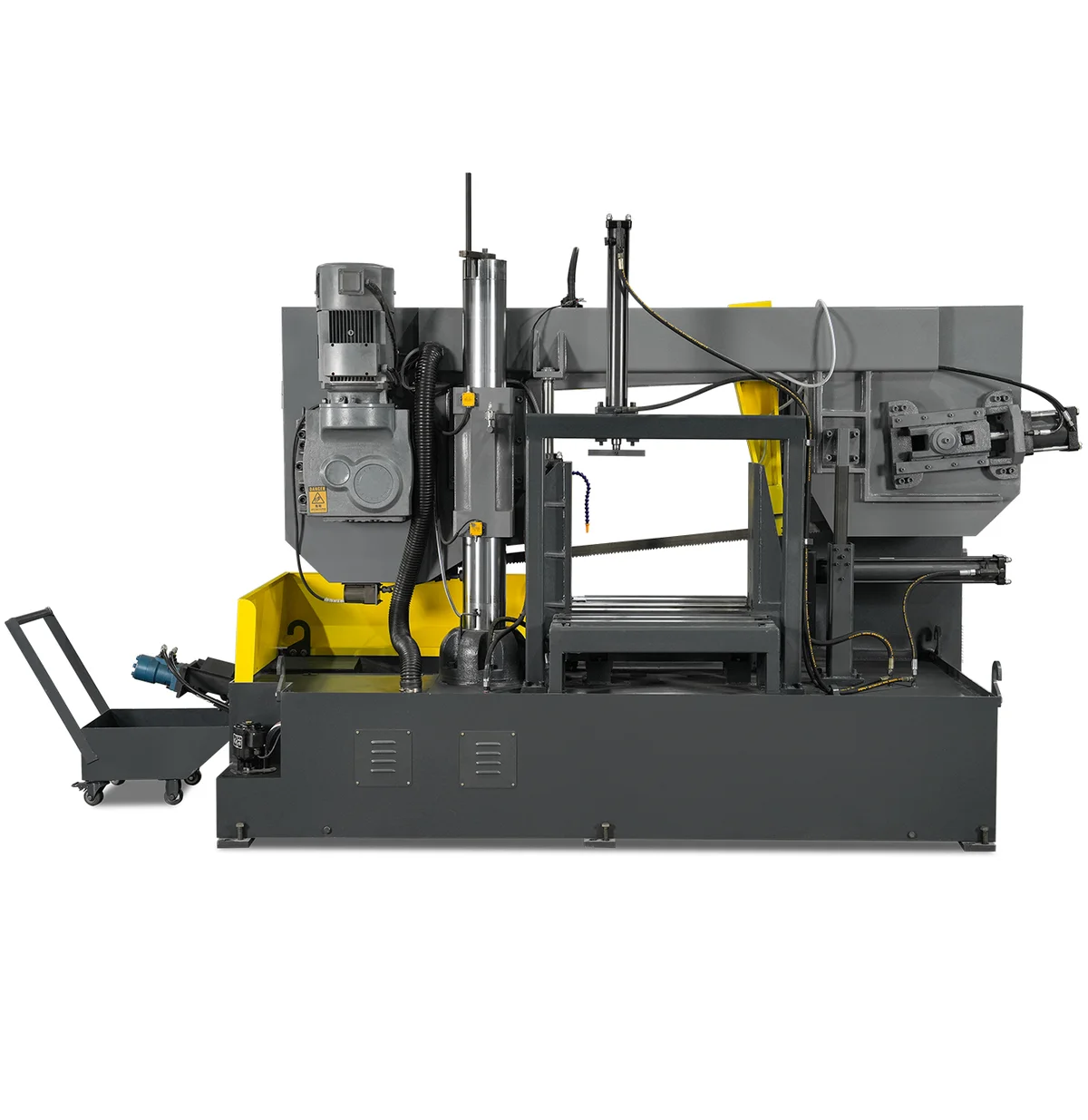
An in-depth anatomical guide to gantry band saw machines. Learn about the functions of guide arms, blade pulleys, hydraulic vise clamping, and how these parts cooperate to deliver high-precision industrial metal cutting.
To maintain accuracy, efficiency, and safety in high-volume metal sawing operations, plant managers and machine maintenance technicians must have a deep understanding of their machinery’s anatomy. Large-capacity industrial saws are complex assemblies of structural, mechanical, hydraulic, and electrical systems.
The gantry band saw (or double-column band saw) is the industry standard for processing heavy-duty billets, structural steel bundles, and thick alloy plates. In this technical article, we break down the main parts of a gantry band saw machine, explain their functions, and discuss how RAXMEKBANDSAW’s premium component design ensures superior cutting tolerances and machinery lifespan.
The Anatomy of a Gantry Band Saw
A gantry band saw is structured around two vertical columns supporting a horizontal saw frame. This symmetrical layout distributes forces evenly, minimizing vibration compared to pivot-style (scissor) band saws.
Let us examine the critical sub-assemblies and individual parts that make up this machine.
1. Structural Frame and Guides
Columns and Gantry Beam
- Function: The twin columns act as the vertical guideways for the saw head. The gantry beam ties the columns together at the top, forming a rigid closed loop.
- Engineering Quality: In RAXMEKBANDSAW gantry saws, these components are fabricated from thick-plate structural steel, reinforced with internal stiffener ribs, and stress-relieved to prevent deformation under high hydraulic and cutting loads.
Linear Guide Rails and Bearings
- Function: Mounted directly onto the vertical columns, these high-precision linear guide rails direct the vertical travel of the saw head.
- Engineering Quality: RAXMEKBANDSAW utilizes ground linear guide rails with recirculating ball bearing blocks instead of traditional cast-iron dovetail slides. This reduces slide friction, eliminates “stick-slip” motion, and ensures smooth downfeed speed control.
2. Blade Drive and Wheel System
Blade Drive Motor & Helical Gearbox
- Function: The electric motor provides the rotational energy, while the gearbox reduces the motor’s high RPM into the high torque needed to drive the blade through tough metals.
- Engineering Quality: We couple high-efficiency helical-bevel gear reducers directly to the motor shaft. This eliminates belts, delivering up to 98% transmission efficiency with zero slippage.
Drive and Idle Blade Wheels (Pulleys)
- Function: The drive wheel (typically located on the gearbox side) rotates the blade, while the idle wheel (on the tensioning side) maintains tension.
- Engineering Quality: RAXMEKBANDSAW wheels are cast from high-density ductile iron, precision-ground, and balanced to minimize runout and rotational vibration, which protects the blade from micro-fracturing.
3. Blade Guidance & Damping System
Guide Arms
- Function: The guide arms extend down from the saw head and support the blade just before and after the cut. To maximize accuracy, the left guide arm is adjustable and should be positioned as close to the workpiece as possible.
- Engineering Quality: The movement of the adjustable guide arm on RAXMEKBANDSAW machines is motorized or hydraulically driven, making it easy for the operator to set the correct span.
Carbide Guide Pads & Back-up Bearings
- Function: The guide pads clamp the sides of the blade to keep it perfectly vertical, while the back-up bearings support the back edge of the blade, preventing it from bowing upward during the cut.
- Engineering Quality: RAXMEKBANDSAW uses premium-grade tungsten carbide pads. On larger models, these pads are hydraulically clamped to active dampening systems, absorbing high-frequency blade chatter.
4. Work Clamping & Material Feeding
Hydraulic Vise Clamping System
- Function: Clamps the workpiece securely on both sides of the blade to prevent movement during sawing. Even minor workpiece movement can strip teeth or cause crooked cuts.
- Engineering Quality: RAXMEKBANDSAW features full-stroke dual vises. This means the jaws move hydraulically across the entire width of the machine, eliminating manual hand-crank adjustment when changing material diameters.
Bundle Clamping Device (Optional)
- Function: A top-acting hydraulic cylinder that presses down on nested bars or tubes, holding them in a rigid bundle for simultaneous cutting.
- Engineering Quality: Integrated with the main vise hydraulic circuit to ensure equalized clamping pressure from both the sides and the top.
5. Control and Safety Systems
PLC Touchscreen Controller
- Function: The brain of the machine. The operator inputs the material type, size, and target length, and the PLC automatically programs the optimal blade speed and feed rates.
- Engineering Quality: RAXMEKBANDSAW utilizes industrial-grade touchscreens with multilingual interfaces. The system stores up to 100 cutting programs and offers real-time diagnostics.
Blade Tension Safety Switch
- Function: Monitors blade tension. If the blade stretches too much or breaks, the switch instantly cuts power to the drive motor, stopping the machine to prevent injury or equipment damage.
Component Comparison & Maintenance Checklist
To ensure your gantry band saw runs at peak efficiency, refer to the following maintenance table for key parts:
| Machine Component | Key Maintenance Action | Warning Sign of Wear / Failure | RAXMEKBANDSAW Advantage |
|---|---|---|---|
| Carbide Guide Pads | Inspect for wear weekly; clean metal chips. | Crooked cuts; heavy scoring on blade sides. | Precision-ground tungsten carbide for long life. |
| Blade Wheels | Check for wear in the wheel flange and blade seat. | Blade slipping off wheel; high vibration. | Precision-balanced ductile cast iron. |
| Linear Rails | Lubricate weekly with guide rail oil. | Jerky downfeed movement; binding. | Recirculating ball blocks with integrated wipers. |
| Gearbox Oil | Change oil after first 500 hours, then every 2,000 hours. | Gear chatter noise; high gearbox temperature. | Direct-drive helical-bevel; low thermal load. |
| Hydraulic Seals | Inspect hose connections and cylinder rods monthly. | Drop in clamping pressure; visible oil leaks. | Premium seals rated for high cycle count. |
Choose RAXMEKBANDSAW for Reliable Industrial Sawing
Every part of a RAXMEKBANDSAW gantry band saw is engineered for durability, precision, and ease of maintenance. By using high-grade castings, direct-drive gearboxes, and closed-loop hydraulic controls, we deliver sawing systems that stand up to the most demanding heavy-duty environments.
If you are planning to upgrade your sawing department or need engineering advice on material handling and automation, contact RAXMEKBANDSAW today. Our technical specialists will help you design a solution tailored to your production requirements.
Похожие материалы
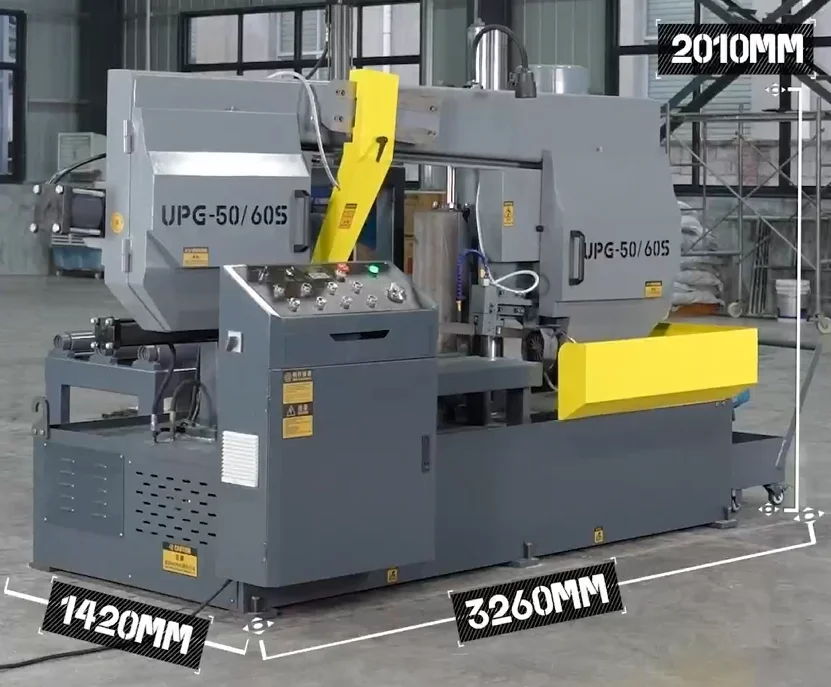
Technical Challenges and Solutions for Large-Capacity Gantry Band Saws
Heavy-duty steel sawing requires massive, highly rigid machines. Learn about the key technical challenges in large-capacity gantry band saws—from vibration damping to active feed rate modulation—and how modern engineering solves them.
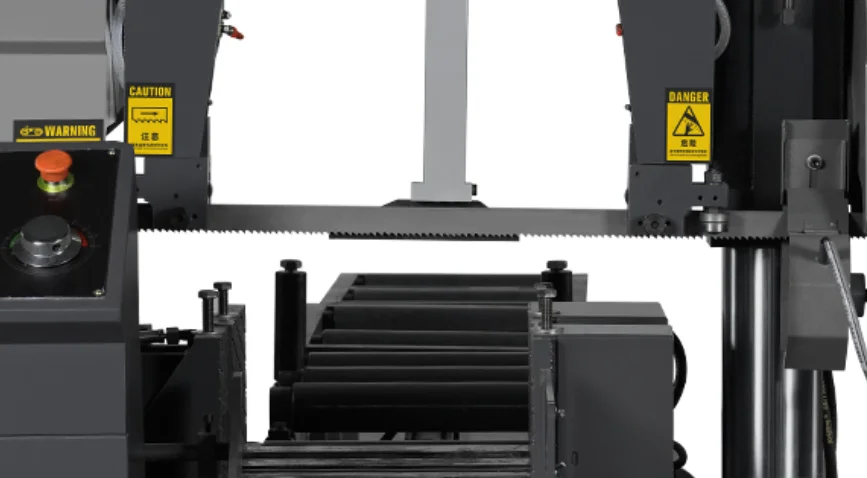
Carbide vs. Bimetal Band Saw Blades — Maximize Your Cutting Strategy
Choosing between bimetal and carbide-tipped band saw blades is a critical decision for metal fabrication shops. Learn how to select the right blade, minimize cost-per-cut, and increase productivity by 300% when cutting alloy steels.
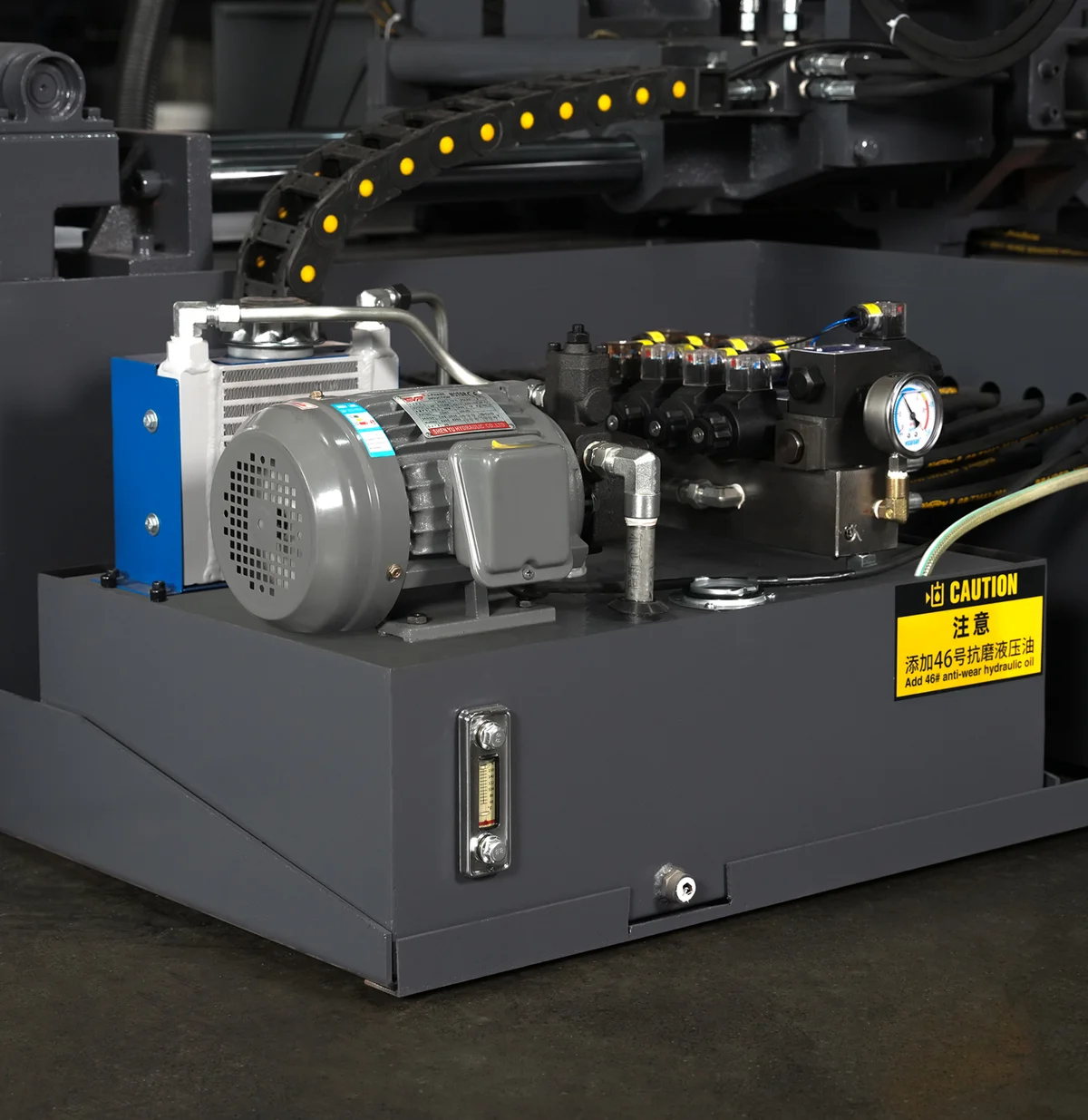
CNC Band Saw Machine – Enhance Your Cutting Performance with VFD Gearmotor Drives or Hydraulic Servo Feed Systems
A CNC band saw machine is one of the most advanced and efficient technologies used in modern metal fabrication. In simple terms, it utilizes computerized control for automatic, high-precision sawing of heavy metals, profiles, and structural sections.